

Vietnam Visa E Visa: Differences Between E-Visa and Traditional Visa in Detail 2026
In recent years, the demand for entering Vietnam for tourism, business, investment, and employment has increased significantly. To facilitate international travel and simplify immigration procedures, the Vietnamese Government has introduced the Vietnam E-Visa system alongside the traditional visa application process through Vietnamese Embassies and Consulates.
However, many foreigners still do not clearly understand the differences between E-Visas and traditional visas, leading to confusion when choosing the most suitable visa type for their travel purposes.
This article will help you fully understand:
- What is a Vietnam E-Visa?
- What is a traditional Vietnam visa?
- Key differences between the two visa types
- Advantages and disadvantages of each option
- When to choose an E-Visa
- When to apply for a traditional visa
- Important notes for entering Vietnam
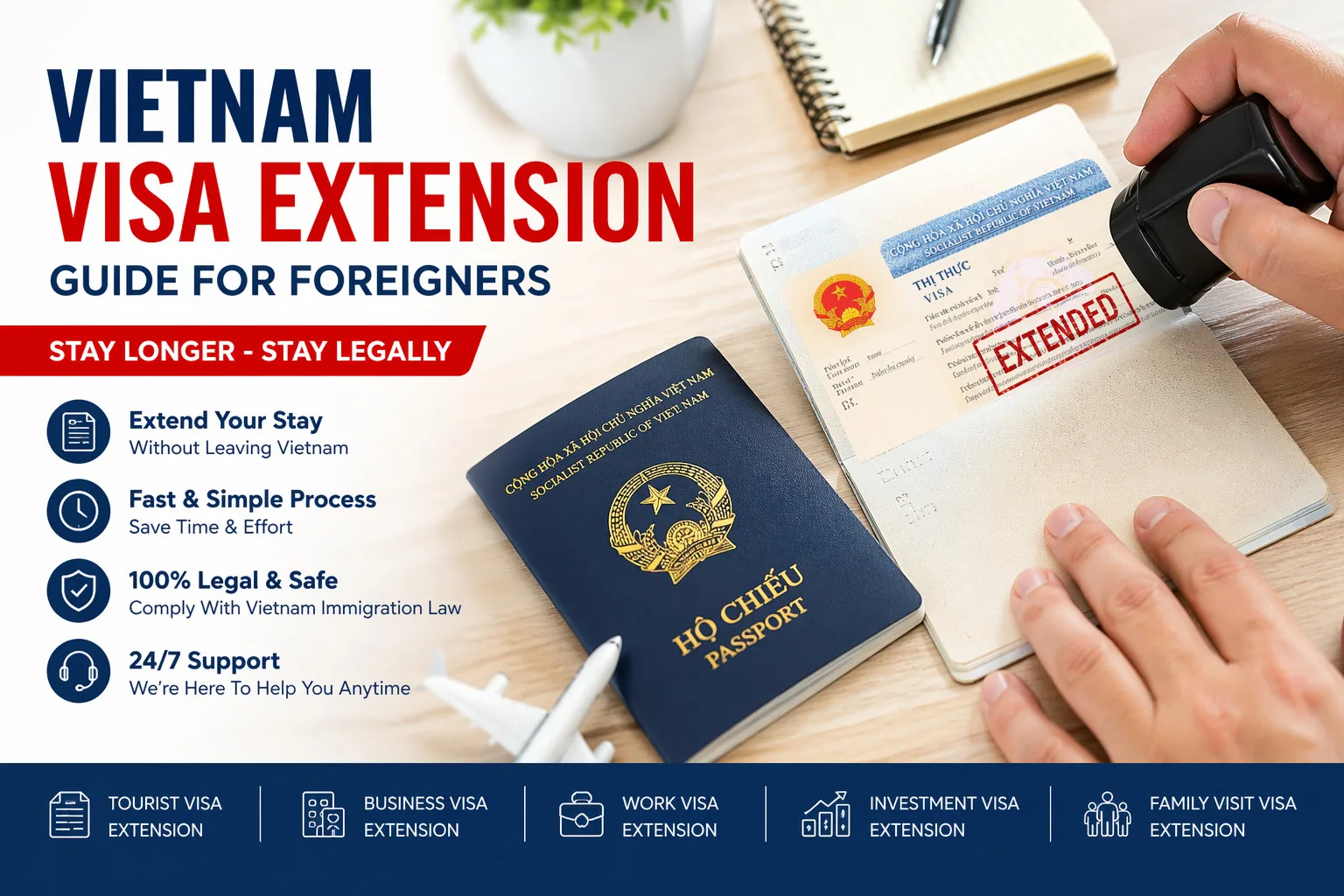
What Is a Vietnam E-Visa?
A Vietnam E-Visa is an electronic visa issued online by the Vietnam Immigration Department for foreigners who wish to enter Vietnam for purposes such as:
- Tourism
- Business trips
- Visiting relatives
- Conferences and seminars
- Market research
- Short-term work assignments
Applicants can complete the entire visa application process online without visiting a Vietnamese Embassy or Consulate.
Under current regulations, the Vietnam E-Visa is valid for up to 90 days and supports:
- Single Entry
- Multiple Entry
Official websites:
What Is a Traditional Vietnam Visa?
A traditional Vietnam visa is a visa issued:
- At a Vietnamese Embassy
- At a Vietnamese Consulate
- Or through an immigration approval letter
The visa is attached directly to the passport in the form of:
- Visa sticker
- Visa stamp
This type of visa is commonly used for:
- Long-term employment
- Investment
- Long-term family visits
- Study programs
- Professional work assignments
- Long-term residence
The Development of Vietnam E-Visa
The Vietnamese Government officially expanded the E-Visa program on August 15, 2023, allowing citizens of all countries and territories worldwide to apply for Vietnam E-Visas.
At the same time:
- Visa validity increased from 30 days to 90 days
- Multiple-entry E-Visas became available
This expansion is considered a major immigration reform aimed at promoting:
- International tourism
- Foreign investment
- Global mobility
- Digital transformation in immigration management
Comparison Between Vietnam E-Visa and Traditional Visa
| Criteria | Vietnam E-Visa | Traditional Visa |
|---|---|---|
| Application Method | Online | In-person |
| Processing Authority | Electronic immigration system | Embassy/Consulate |
| Processing Time | 3–5 working days | 5–10 days or longer |
| Embassy Visit Required | No | Yes |
| Result Delivery | PDF by email | Visa sticker in passport |
| Entry Types | Single/Multiple Entry | Multiple visa categories |
| Maximum Validity | 90 days | More flexible |
| Extension Availability | Limited | Easier |
| Required Documents | Simple | More complicated |
| Cost | Lower | Higher |
| Suitable For | Tourism, short-term business | Employment, investment, long-term stay |
Advantages of Vietnam E-Visa
1. Fully Online Application
Foreigners only need:
- A computer or smartphone
- Internet access
To apply from anywhere in the world.
2. Saves Time
Typical processing time:
- 3–5 working days
No need to:
- Book embassy appointments
- Travel for document submission
- Attend interviews
3. Lower Cost
Official government fees:
- Single Entry: 25 USD
- Multiple Entry: 50 USD
4. Simple Procedures
Applicants only need:
- Passport
- Portrait photo
- Travel information
- Online payment method
5. Ideal for International Tourists
Vietnam E-Visas are especially suitable for:
- Short-term travelers
- Digital nomads
- Business travelers
- Family visitors
Disadvantages of Vietnam E-Visa
1. Not Ideal for Long-Term Stay
E-Visas are mainly suitable for:
- Short-term stays
- Temporary visits
Not ideal for:
- Long-term employment
- Immigration
- Long-term study programs
2. Limited Extension Options
In many cases:
- E-Visas cannot be easily extended
- Applicants may need to leave Vietnam and apply again
3. Easy to Make Mistakes During Self-Application
Common mistakes include:
- Incorrect passport number
- Wrong birth date
- Selecting the wrong visa type
- Choosing the wrong entry checkpoint
Many travelers have reported problems caused by inaccurate E-Visa information.
Advantages of Traditional Vietnam Visa
1. More Flexible Validity Periods
Traditional visas may be valid for:
- 6 months
- 1 year
- Several years
Depending on the purpose of stay.
2. Suitable for Employment and Investment
Traditional visas are commonly used by:
- Foreign experts
- Investors
- Skilled workers
- Work permit holders
3. Easier Extension Process
Traditional visas are generally:
- Easier to extend
- Easier to convert to different immigration purposes
Convenient for long-term residents.
4. Various Specialized Visa Categories
Examples include:
- DN Visa (Business)
- LD Visa (Labor)
- DT Visa (Investment)
- TT Visa (Family Visit)
Disadvantages of Traditional Vietnam Visa
1. More Complicated Procedures
Applicants often need:
- Sponsorship documents
- Work permits
- Immigration approval letters
- Company documents
2. Longer Processing Time
Processing may take:
- 1–2 weeks
- Or even longer
3. Higher Costs
Expenses may include:
- Visa fees
- Service fees
- Approval letter fees
- Airport stamping fees
4. Embassy or Airport Procedures Required
Some applicants must:
- Visit the Embassy
- Obtain visa stamps at the airport
When Should You Choose Vietnam E-Visa?
Vietnam E-Visa is suitable if you:
- Travel for short-term tourism
- Attend short business trips
- Visit friends or relatives
- Do not want to visit an Embassy
- Prefer fast online processing
Especially suitable for:
- Independent travelers
- Remote workers
- Short-term business visitors
When Should You Choose a Traditional Visa?
Traditional visas are more suitable if you:
- Work long-term in Vietnam
- Invest in Vietnam
- Study long-term
- Need to stay more than 90 days
- Require multiple extensions
Vietnam E-Visa Application Process
Step 1: Visit the Official Website
Step 2: Upload Documents
Including:
- Portrait photo
- Passport scan
Step 3: Fill in Personal Information
Applicants must provide:
- Full name
- Nationality
- Passport details
- Purpose of entry
- Entry checkpoint
Step 4: Make Payment
Online payment methods:
- Visa
- Mastercard
- JCB
Step 5: Receive Visa Result
Results are usually available within:
- 3–5 working days
Traditional Visa Application Process
The standard process includes:
- Preparing documents
- Obtaining immigration approval letter
- Submitting documents at Embassy or Consulate
- Waiting for approval
- Receiving visa sticker in passport
Common Mistakes When Applying for Vietnam E-Visa
Choosing the Wrong Visa Type
Some travelers:
- Need multiple-entry visas
- But mistakenly select single-entry
This often requires reapplying for a new visa.
Incorrect Entry Date
Some applicants mistakenly believe:
- The visa becomes valid on the actual arrival date
In reality:
- The visa validity starts from the date printed on the visa.
Incorrect Entry Checkpoint
Some travelers experienced problems when entering Vietnam through a checkpoint different from the one listed on their E-Visa application.
Can Vietnam E-Visas Be Extended?
In many cases:
- E-Visas are difficult to extend
- Foreigners may need to exit Vietnam and apply again
Meanwhile:
- Traditional visas provide more flexibility for extensions and long-term residence.
Do You Need to Print Vietnam E-Visa?
Yes.
Although the visa is electronic,:
- Airlines
- Customs officers
- Immigration authorities
Often still require:
- A printed copy of the E-Visa
Vietnam E-Visa Entry Checkpoints
Currently, E-Visas are accepted at:
- International airports
- Land border checkpoints
- Seaports
Vietnam currently supports more than 80 E-Visa entry checkpoints nationwide.
Should You Use Vietnam Visa Services?
Many travelers choose visa agencies to:
- Save time
- Reduce mistakes
- Handle difficult applications
- Obtain urgent visa support
Especially suitable for:
- First-time applicants
- Companies sponsoring foreign experts
- Travelers needing urgent visas
Vietnam Urgent Visa Services
Some agencies support:
- 1-day visa processing
- 4-hour urgent visas
- Weekend visa services
However:
- Costs are higher than standard visa processing
The Future of Vietnam E-Visa
The Vietnamese Government continues to:
- Expand the E-Visa system
- Increase the number of entry checkpoints
- Improve online processing systems
- Apply AI technology for immigration management
These improvements help Vietnam become a more travel-friendly destination for international visitors.
Conclusion
Vietnam E-Visa and traditional visas each offer different advantages depending on travelers’ specific needs.
If you:
- Travel short-term
- Need fast business entry
- Prefer simple procedures
Then Vietnam E-Visa is the best option.
However, if you:
- Work long-term
- Invest in Vietnam
- Need long-term residence
Then a traditional visa may be more suitable.
Understanding the differences between E-Visas and traditional visas helps foreigners choose the correct visa type, save time and money, and avoid unnecessary immigration issues when entering Vietnam.
Contact for Urgent Visa Support
- Hotline / WhatsApp / Zalo: +84986979330
- Email: support@vietnamevisaservice.vn
Note: vietnamvisa.group is a commercial/personal website, NOT an official government website. We operate as a private agent and charge a fee for application services. If you do not require our simplified forms and visa application support, you can apply directly on the official government website.